
Chief Justice Burger and the Battle Over the Future of the Bankruptcy Judiciary
By Eli Friedman, Student at University of Chicago Law School
Introduction
In the fall of 1978, Chief Justice Warren E. Burger took the extraordinary step of having a letter hand-delivered to President Carter asking him to veto a bill that had passed both houses of Congress. It was apparently the first time in history that a Chief Justice directly appealed to the president for such relief.[1] What bill could possibly have drawn Chief Justice Burger into the legislative arena? As it turned out, Burger was objecting to the Bankruptcy Reform Act of 1978, which would have modified the bankruptcy judiciary to give bankruptcy judges greater independence and elevate their institutional status. In the end, President Carter signed the bill the night before it would have been pocket vetoed, ignoring Chief Justice Burger’s objections and establishing the modern bankruptcy judiciary. This dramatic episode reveals the resistance bankruptcy judges faced as they attempted to professionalize in the decades following the passage of the Bankruptcy Act of 1898, which established a system of bankruptcy “referees.” Today, 100 years after the founding of the organization that would become the National Conference of Bankruptcy Judges, it is a reminder of the extraordinary effort that went into the creation of the modern, professionalized bankruptcy judiciary.
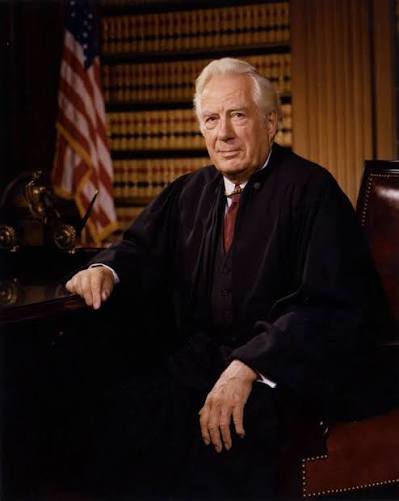
Chief Justice Warren E. Burger
I. The Early Bankruptcy Judiciary
The 1898 Bankruptcy Act, America’s first enduring bankruptcy law, made the district courts “courts of bankruptcy.” These courts could appoint “referees,” officials whose job it was “to assist in expeditiously transacting the bankruptcy business.”[2] Referees served both a judicial and an administrative function. Their obligations included appointing trustees, adjudicating bankruptcy petitions, maintaining records in bankruptcy proceedings, and occasionally distributing property after bankruptcy proceedings.[3] Referees’ substantive decisions were subject to review by the district court, and they were given two-year terms. Until 1946, referees were paid a percentage of the assets distributed in bankruptcy proceedings, a system that made the referees financially vulnerable to changes in the economy.[4]
The role of the referee expanded after 1898 as the proportion of full-time referees increased. By 1957, there were more full-time than part-time bankruptcy referees. Just a decade later, some district courts, including the Northern District of Texas, began to advocate for referees to wear robes, an indicator that referees were gaining legitimacy as judicial officers. However, other courts argued that referees should not have robes at all, or they suggested that referees’ robes should be gray instead of black.[5]
The professionalization of the bankruptcy judiciary in the 20th century was helped by the 1926 formation of the National Association of Referees in Bankruptcy (NARB). NARB was formally established at a July 1926 conference of bankruptcy referees at the Book-Cadillac Hotel in Detroit.[6] In its early years, NARB pushed for increased education and training of bankruptcy referees. It also advocated for the inclusion of bankruptcy referees in the Judicial Conference of the United States (JCUS) and sought to adopt guidelines and practices to improve the general perception of bankruptcy. Despite these efforts, referees were not included in JCUS, and they remained—for some time—institutionally and professionally subordinate to district judges. The organization changed its name to the National Conference of Referees in Bankruptcy in 1965, and then again in 1973 to the National Conference of Bankruptcy Judges (NCBJ) following the proliferation of new bankruptcy rules that referred to referees as “judges” for the first time.[7]
II. Chief Justice Burger Takes a Stand
When President Richard Nixon nominated Warren E. Burger as Chief Justice in 1969, Burger brought to the Court a strong opposition to the institutional elevation of bankruptcy referees. He found bankruptcy law to be “distasteful” and believed the attorneys who practiced it were “low level.”[8] In particular, Burger opposed the inclusion of bankruptcy referees on any JCUS committee.
Foreshadowing what was to come, Burger lobbied Congress to remove the requirement that two referees sit on the Commission on the Bankruptcy Laws of the United States, created in 1970 at the urging of Senator Quentin Burdick. After Burger succeeded, Burdick expressed on the Senate floor that he still expected Burger to appoint referees. Burger refused, appointing district judges instead, including Judge Edward Weinfeld, who chaired the Judicial Conference Bankruptcy Committee and opposed the inclusion of referees on it.[9]
The Commission on the Bankruptcy Laws and the NCBJ both proposed bills that would reform the bankruptcy judiciary. Although their bills were similar in many respects, they differed on several key questions of institutional control. The NCBJ’s bill provided for appointment by the circuit councils, while the Commission’s bill provided for presidential appointment with the advice and consent of the Senate; both proposals contemplated fifteen-year terms. Further, whereas the Commission’s bill called for bankruptcy clerks to be appointed by district judges, the NCBJ preferred for the bankruptcy judges to appoint their clerks. The Commission also wanted administrative bankruptcy matters to be handled by a new executive agency, the U.S. Bankruptcy Administration, leaving judges to deal with disputed matters between parties in interest. The NCBJ’s bill kept administrative functions within the judiciary.[10]
The two bills were combined along with suggestions by other parties into H.R. 6, introduced on January 4, 1977—the first day of the first session of the 95th Congress. The bill would create a separate bankruptcy judiciary under Article III. Perhaps counterintuitively, the Article III provision was opposed by bankruptcy judges in the NCBJ, who worried they would be passed over for appointments under an Article III structure due to their lack of political influence.[11]
Burger and JCUS strongly opposed the creation of an independent bankruptcy judiciary under either Article I or Article III. In fact, at a May 1977 reception, Burger reportedly told Kenneth Klee—at the time a Congressional staffer—that H.R. 6 had been “sneaked through without any notice to the Judicial Conference.” Criticizing the bill, Burger also told Klee that “a magistrate is three times more important than a bankruptcy referee” and “elevating the referees’ judicial stature is like elevating the clerks of the courts.”[12] The Ad Hoc Committee on the Bankruptcy System, which was organized by Burger without the representation of a single bankruptcy judge, published reports and testified before Congress to advocate against the creation of an independent bankruptcy judiciary. Many circuits adopted Burger and JCUS’s position.[13]
Surprisingly, H.R. 6—which turned into H.R. 7330, and then the clean bill H.R. 8200—eventually passed through the House of Representatives with its Article III proposal intact. The Senate, however, strongly opposed several key features of the House bill, including the creation of an Article III bankruptcy court, and rejected H.R. 8200. A compromise abandoning Article III status was subsequently introduced in the House and passed by unanimous consent on September 28, 1978.[14] As Richard Levin recounts, “We knew at that time that there was no way the Senate would agree to an Article III court. But we had to make a strong showing so we could get as much out of the court system, in elevating its stature and prestige, as we could.”[15] The bill stipulated that bankruptcy judges would sit on independent bankruptcy courts, and it included a mandate that bankruptcy judges would be represented in JCUS and on the board of the Federal Judicial Center.[16]
Burger was incensed. He thought the bill elevated the status of bankruptcy judges, a change he had fought ardently to prevent. Burger berated Senator DeConcini, a key player on the Senate side, then convinced Senator Thurmond to put a “hold” on the legislation before the Senate could vote on it.[17] As the end of the 95th Congress’s term drew closer, after a series of meetings to work out amendments to the bill, Thurmond agreed to remove the hold and let the bill be considered.[18] Under the amended bill, the bankruptcy court would be a separate court but an adjunct of the district court, and the President would nominate bankruptcy judges on the consideration of circuit council recommendations, among other changes. The new bill passed both chambers and was transmitted to the White House, where Burger made his last attempt to kill the legislation.[19]
Burger had a letter hand-delivered to President Carter’s desk, bypassing the usual White House review process. The letter stated,
To create 215 bankruptcy judgeships that are not needed and which the Judicial Conference had unanimously disapproved, is wholly unjustified. To put it bluntly, it stems from the desire of those officers who were initially appointed to office as bankruptcy referees and who serve as adjunct aides to District Judges to achieve a higher status, with virtually all but the status of “life tenure” judges—almost like promoting all of the Army’s Sergeants Major to Captain rank![20]
The letter included an estimate of the cost of elevating the bankruptcy judiciary, suggesting that H.R. 8200 would cost nearly $50,000,000 more in recurring annual costs than the Chief Justice’s preferred bill, S. 2266. This figure, apparently an appeal to Carter’s fiscal concerns, turned out to be more than double the actual cost of the bill.[21]
President Carter nevertheless signed the bill into law on November 6, 1978.[22] The basic structure of the modern bankruptcy judiciary had finally been established, ending Burger’s years-long campaign against the professionalization and the institutional elevation of bankruptcy judges.
[1] Penn Carey Law, Bankruptcy Courts: From Anonymity to Respect, at 1:07:56 (National Bankruptcy Archives Oral Histories, Sept. 4, 2012), https://archives.law.upenn.edu/Documents/Detail/bankruptcy-courts-from-anonymity-to-respect-2012/1210.
[2] Bankruptcy Act of 1898, ch. 541, 30 Stat. 544 (repealed 1978).
[3] Fed. Jud. Ctr., Court Officers and Staff: Bankruptcy Referees, FJC, https://www.fjc.gov/history/administration/court-officers-and-staff-bankruptcy-referees (last visited Aug. 13, 2026).
[4] Penn Carey Law, supra note 1, at 01:00.
[5] Id. at 01:48–02:45.
[6] Nat’l Conf. of Bankr. Judges, The NCBJ’s Formation, NCBJ, https://ncbj.org/the-ncbjs-formation/ (last visited Aug. 13, 2026).
[7] Nat’l Conf. of Bankr. Judges, NARB Changes Its Name, NCBJ, https://ncbj.org/narb-changes-its-name/ (last visited Aug. 13, 2026).
[8] Penn Carey Law, supra note 1, at 07:05.
[9] Id. at 08:11–09:53.
[10] Id. at 12:10–16:10.
[11] Kenneth Klee, Legislative History of the New Bankruptcy Law, 28 DePaul L. Rev. 941, 946 (1979); Penn Carey Law, supra note 1, at 12:30.
[12] Penn Carey Law, supra note 1, at 28:00–30:00.
[13] Id. at 31:10–32:40.
[14] Klee, supra note 11, at 946–54.
[15] Penn Carey Law, supra note 1, at 58:44–58:58.
[16] Id. at 59:10–1:00:10.
[17] Klee, supra note 11, at 954.
[18] See Geraldine Mund, Appointed or Anointed: Judges, Congress, and the Passage of the Bankruptcy Act of 1978 – Part Three: On the Hill, 81 Am. Bankr. L.J. 341, 368–70 (2007).
[19] Penn Carey Law, supra note 1, at 1:05:05–1:07:50; Klee, supra note 11, at 954.
[20] Penn Carey Law, supra note 1, at 1:08:00–1:08:35; Geraldine Mund, Appointed or Anointed: Judges, Congress, and The Passage of the Bankruptcy Act of 1978, Part Five: Inside the White House, 82 Am. Bankr. L.J. 175, 183–84 (2008).
[21] Mund, supra note 21, at 183–84; Penn Carey Law, supra note 1, at 1:10:12–1:11:37.
[22] Mund, supra note 21, at 192–93.